Corporate Governance
SuMi TRUST Group is enhancing its corporate governance structure in line with its business model. In addition to the statutory committees of a company with Three Committees, we have also established a Risk Committee and Conflict of Interest Committee, both of which function as advisory bodies to the Board of Directors. We also strive to enhance management transparency by appointing an external director as Chairperson of the Board of Directors.
Basic Initiative Policy
In order to implement sound management based on a high degree of self-discipline guided by our fiduciary spirit and to gain the unwavering trust of society, we are committed to enhancing corporate governance along the lines of the following basic philosophy with the objective of improving the Group’s sustainable growth and medium- to long-term corporate value.
Having defined the SuMi TRUST Group’s Reason for Existence (“Purpose”) and identified its high-priority management issues (“Materiality”), including sustainable society, financial well-being, fiduciary spirit, and human capital (specialization and diversity) , SuMi TRUST Group also recognizes that taking on the mission of solving social issues presents the SuMi TRUST Group with growth opportunities, which is why the Company shall place at the core of its management approach the notion of “balanced creation of both social and economic value.”
As the foundation for every activity to be shared by all the officers and employees of the SuMi TRUST Group, the Board of Directors shall establish management principles (“Mission”), an ideal model (“Vision”), and codes of conduct (“Value”).
Basic Philosophy
- SuMi TRUST Group shall respect shareholder rights, and endeavor to develop an environment in which shareholders can exercise their rights appropriately and effectively, and to secure the effective equal treatment of shareholders;
- By recognizing the importance of its social responsibilities and public mission, SuMi TRUST Group shall endeavor to appropriately cooperate with its stakeholders, including shareholders, clients, employees, business partners, and local communities (hereinafter referred to as “Stakeholders”), and to develop a corporate culture and climate in which it conducts sound business operations based on a high degree of self-discipline;
- In order to establish a basis for constructive dialogue with its Stakeholders, SuMi TRUST Group shall separately set out its Disclosure Policy, and endeavor to appropriately disclose corporate information, including non-financial information, and ensure the transparency of its corporate management.
- As the financial holding company that assumes the corporate management function of the SuMi TRUST Group, SuMi TRUST Group shall adopt the institutional design of a Company with Three Committees and, by separating business execution from oversight, shall endeavor to ensure the effectiveness of the Board of Directors’ oversight function; and
- SuMi TRUST Group shall engage in constructive dialogue with its Stakeholders in order to contribute to sustainable growth, as well as the medium- to long-term enhancement of the corporate value of SuMi TRUST Group.
Basic Policy on Corporate Governance
Corporate Governance Report
Our Views on Corporate Governance
SuMi TRUST Group is a financial holding company with many subsidiaries under its Group umbrella, including SuMi TRUST Bank, Sumitomo Mitsui Trust Asset Management, and Amova Asset Management. Guided by our fiduciary spirit, we aim to leverage our significant expertise and creativity to combine our banking, asset management & administration, and real estate businesses to deliver total solutions to our clients as their "Best Partner." In order to fulfill our principles and live up to the expectations of our stakeholders, we make every effort to ensure the soundness and reliability of the Group's business model, as well as management transparency, and continually strive to enhance the Group's corporate governance.
Corporate Governance System
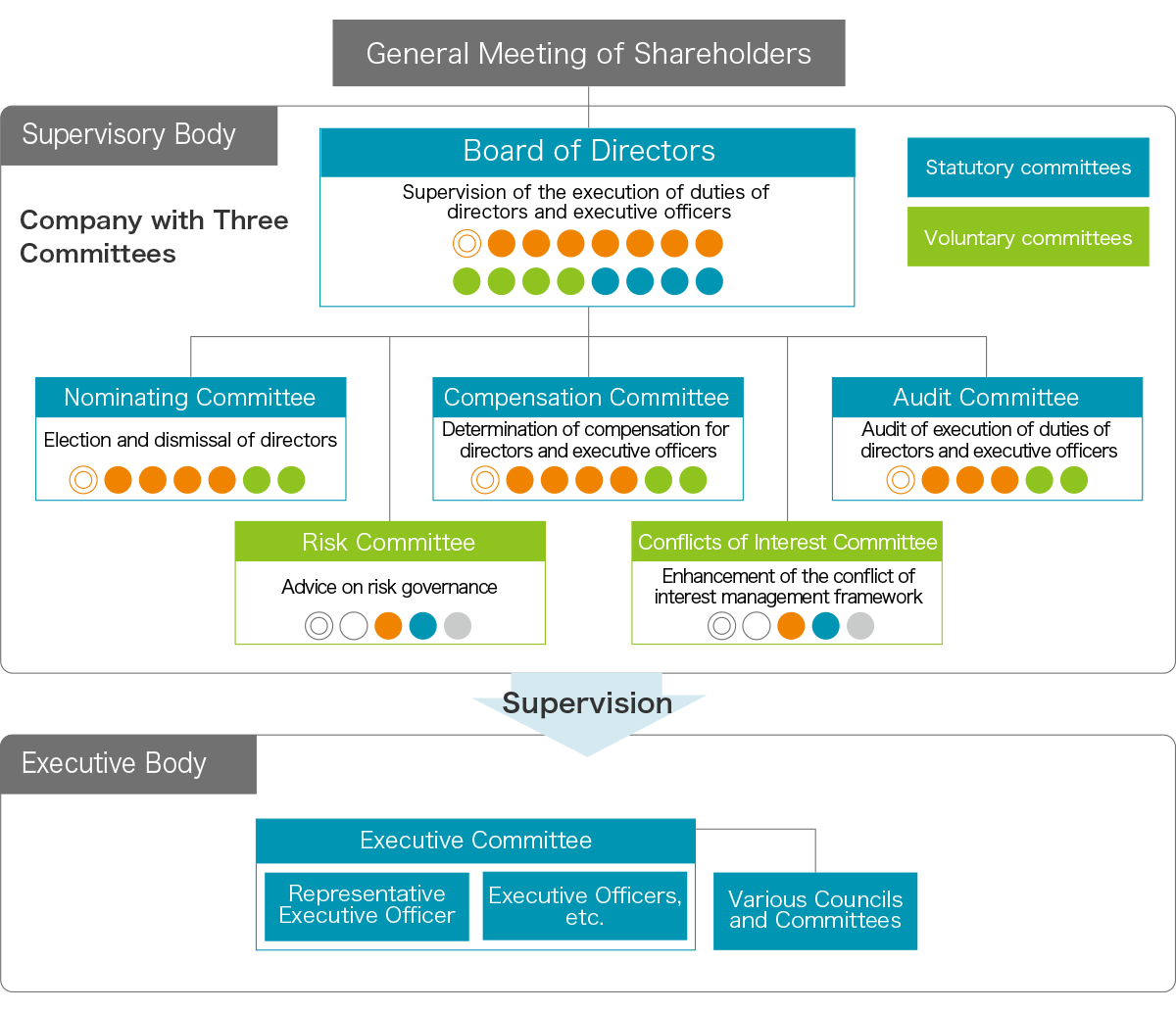
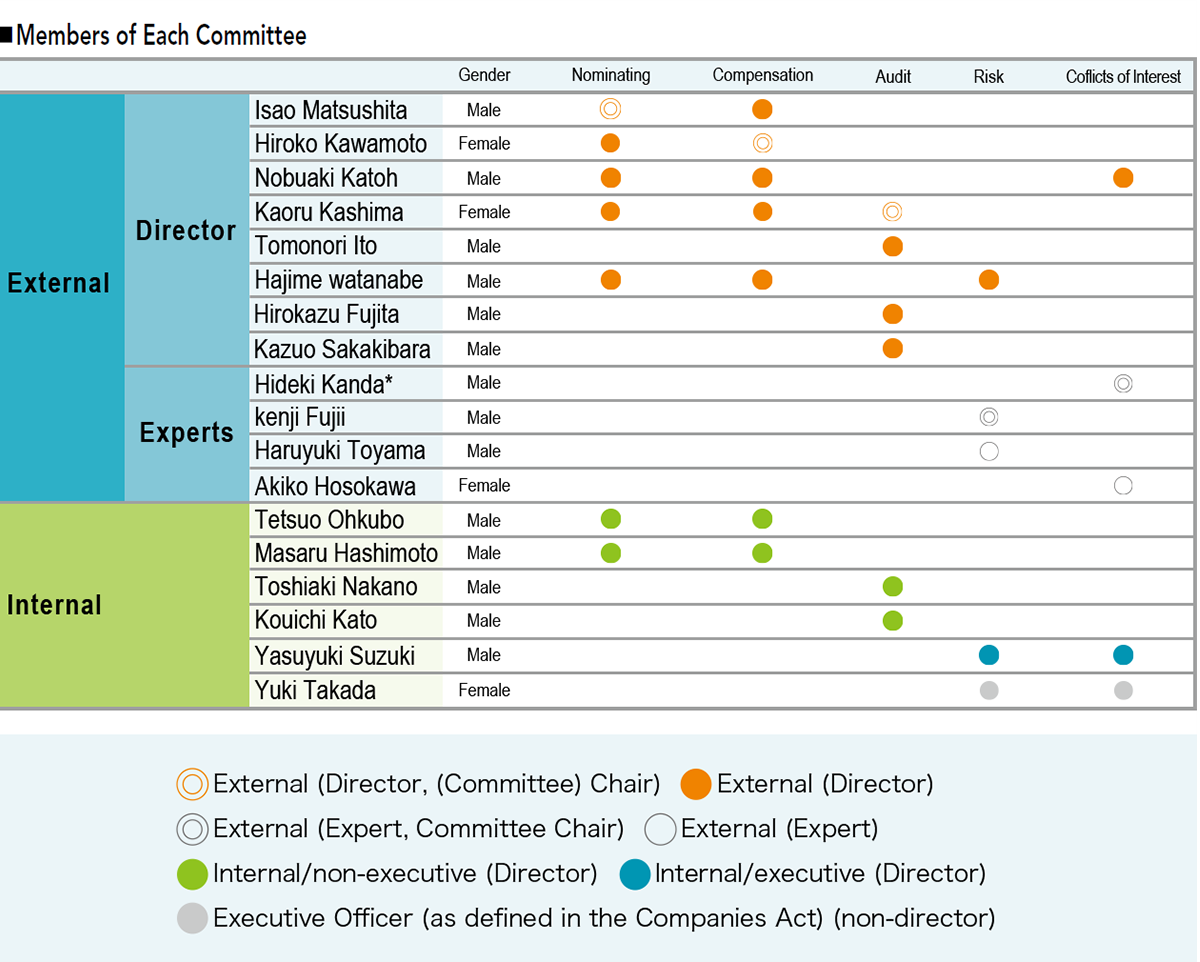
* Mr. Hideki Kanda is an external director of SuMi TRUST Bank.
Independence of Directors
SuMi TRUST Group has established nomination policies of external directors in the Basic Policy on Corporate Governance . External directors are decided from among those who can address SuMi TRUST Group’s high-priority management issues (Materiality) with deep insight and extensive experience in corporate management, finance and accounting, the areas of legal, risk management, and compliance, the areas of trust, asset management, and asset administration, digital technology/IT, internationality, or in the areas of sustainability, including knowledge and experience about social issues, environment, and DE&I. They shall also exhibit the following qualities: (i) A person who satisfies the Independence Standards of SuMi TRUST Group, and who is deemed unlikely to give rise to conflicts of interest with general shareholders of SuMi TRUST Group; (ii) A person who fully understands SuMi TRUST Group’s management principles and its social responsibilities and roles as a trust bank group, and who can monitor the management of SuMi TRUST Group and give accurate and appropriate opinions and advice. Furthermore, these eight external directors were appointed as independent officers as they satisfied theIndependence Standards.
Board of Directors
The Board of Directors determines the basic management policies of SuMi TRUST Group, such as medium- to long-term management strategies and a policy on internal management, and supervises the execution status. In this way and in order to earn trust as fiduciary from all stakeholders of the Group, it distributes resources appropriately to the stakeholders toward the realization of its Purpose and ensures corporate sustainability.Thus, with the exception of matters that are required by law to be decided by the Board of Directors, the Board of Directors, in principle, delegates decisions on the execution of business to executive officers, and supervises the execution of business by exective officers, etc.
For more information about roles and responsibilities of the Board of Directors, please see the following documentBasic Policy on Corporate Governance
The Board of Directors at SuMi TRUST Group has appointed a sufficient number of directors considered necessary and appropriate for the Board to demonstrate an effective supervisory function as required of a financial holding company tasked with the management of SuMi TRUST Group. In determining the number of directors, due consideration is also given to ensuring diversity and expertise among directors.
In light of the importance of the role of independent external directors in corporate governance, we have established a principle that, at least one-third of the directors on the Board of Directors should be independent external directors.The Company has established and disclosed Independence Standards of Independent Directors. In principle, all statutory committees are chaired by external directors.
When deciding on director candidates, we nominate those who can address SuMi TRUST Group’s high-priority management issues (Materiality) with deep insight and extensive experience in corporate management, finance and accounting, the areas of legal, risk management, and compliance, the areas of trust, asset management, and asset administration, digital technology/IT, internationality, or in the areas of sustainability, including knowledge and experience about social issues, environment, and DE&I. We shall shall ensure a board of diverse and balanced composition that is appropriate to properly monitor the wide range of business areas as a trust bank group, based on the SuMi TRUST Group’s Reason for Existence (“Purpose”).
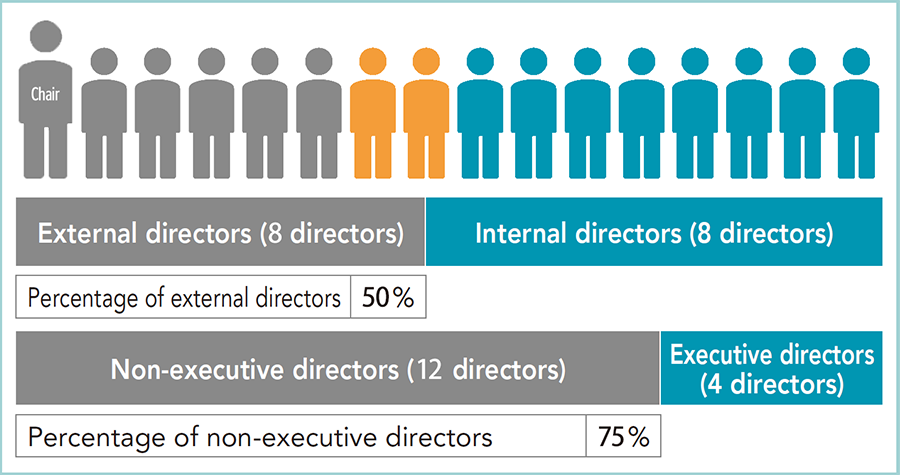
- All eight external directors have been registered as independent officers with the relevant securities exchange.
- Of the 13 directors, 10 are male and 3 are female (shown in orange above).
- 15 Board of Directors meetings were convened during the period July 1, 2024 through June 30, 2025.
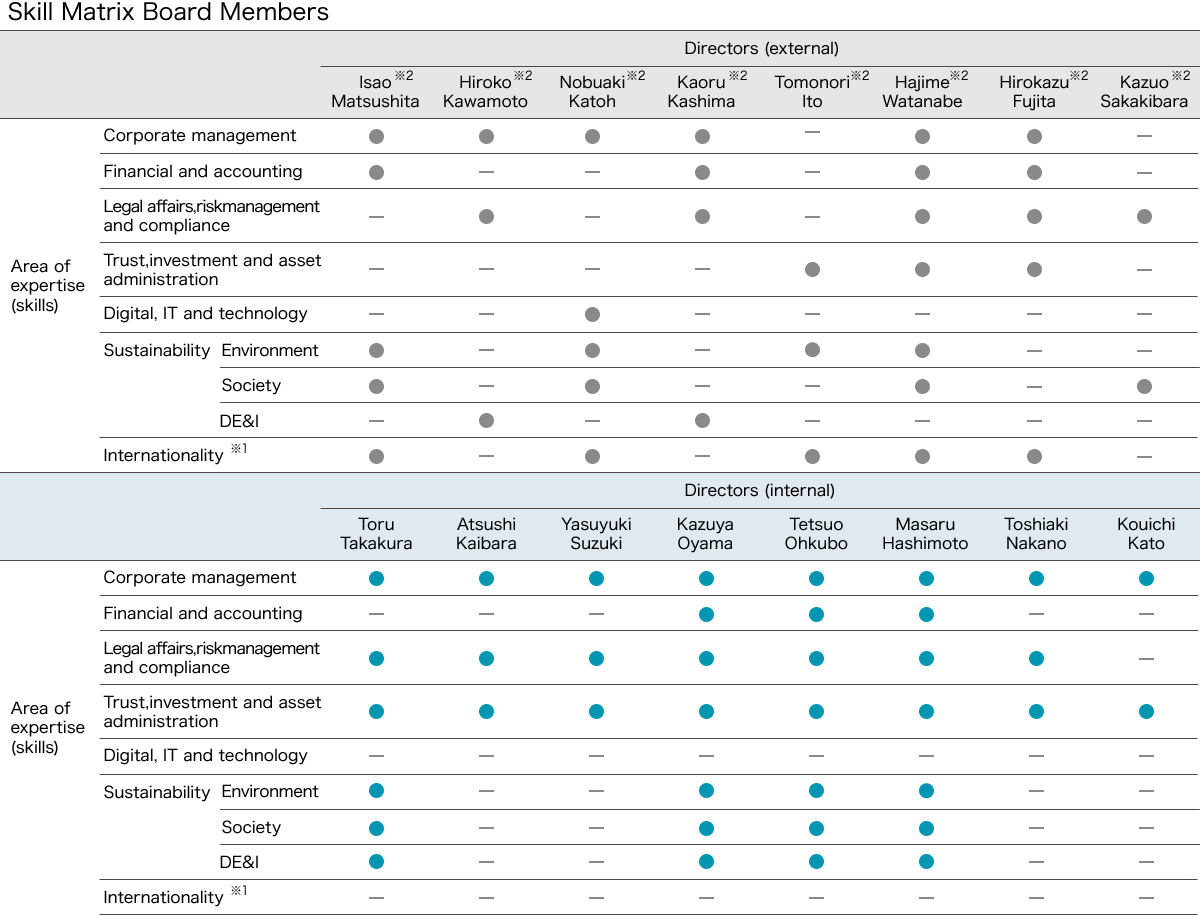
*1Judged based on whether or not the person has overseas work experience, etc.
*2External director as prescribed in Article 2, item 15 of the Companies Act. The overall balance, including the areas of expertise and experience (skills) listed above, is taken into consideration when external Directors are selected.
The deliberations of the Board of Directors are based on an annual schedule formulated with reference to the Evaluation of the Board of Directors conducted every year. Accordingly, the topics discussed reflect changes in the internal and external operating environments.
Key deliberations of the Board of Directors in FY2024
Looking back at the external environment during FY2024, the Japanese market returned to a “world with positive interest rates”, supporting the banking business in terms of interest income. Moreover, trust-related businesses, such as asset management and asset administration, performed well on the back of AUF of approximately 640 trillion yen. While our recent performance has been favorable, we believe that expectations from our shareholders and other stakeholders for medium- to long-term growth in the Group are even higher, reflecting the improved business performance of the entire financial industry in response to the rise in domestic interest rates and other factors.
Based on this recognition, the Board of Directors in FY2024 has adopted a policy of intensively discussing topics of high importance for the Group, which is engaged in business model reforms, in terms of establishing a sustainable competitive advantage in the new environment. Specifically, in order to enhance the resolution of medium- to long-term growth that our new business model aims to achieve, and to ensure its steady realization, we conducted a comprehensive review of our management policies including strategic investments and resource allocation which need to be reliably implemented. As part of this process, to have deepened our deliberations, we set the Group’s asset management business strategy and the business portfolio as “Management theme”.
With respect to the asset management business, while the executive side is advancing growth initiatives under the leadership of the responsible executive officers, the Board of Directors has engaged in strategic deliberations about our future growth paths and deliberated from the perspective of how to firmly establish a sustainable competitive advantage by organically combining and integrating the asset management functions of our asset management subsidiaries with the asset sourcing functions of business corporations, and our advisory functions for investors, including wealthy individuals, which are strengths of a trust bank.
In the business portfolio, we confirmed that we have performed at a certain level from the perspective of capital generation. In order to realize a business model that links the Group’s strengths in banking, trusts, asset management, and asset administration, we focused our deliberations on the direction of capital utilization, held lively discussions on the strategic importance of each business as a platform, and evaluated the effects of inter-segmental synergies.
Deliberations of the Board of Directors on the business portfolio, the Group’s asset management business, etc.
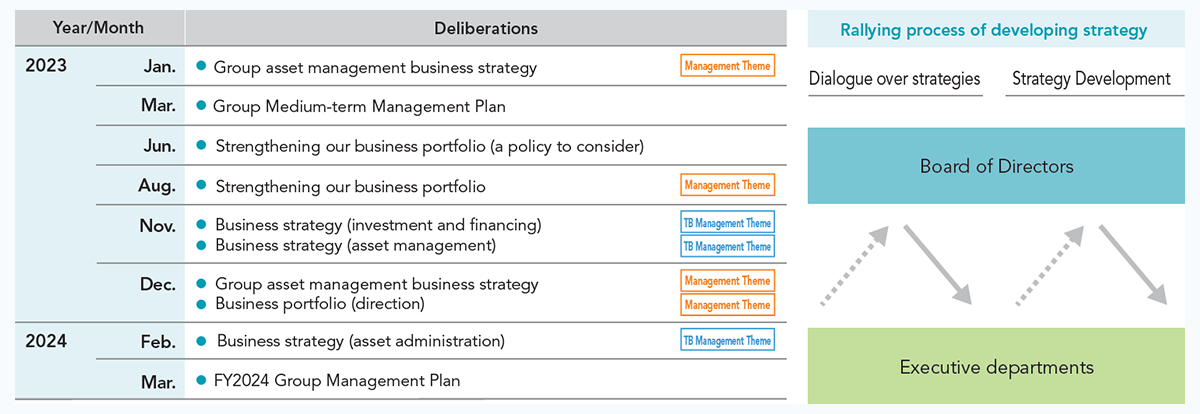
*2The external directors of Sumitomo Mitsui Trust Bank also participate in discussions on “Management Themes” as Board meeting observers, not for the purpose of reaching conclusions, but rather to discuss important management issues and themes from a medium- to long-term perspective freely and openly, so that their viewpoints and opinions are capitalized on for management. In addition, agenda on important management issues at the Board of Directors of Sumitomo Mitsui Trust Bank that are deliberated together with our SuMi TRUST Holdings’ external directors are set as “TB Management Theme.”
Deliberations by the Board of Directors
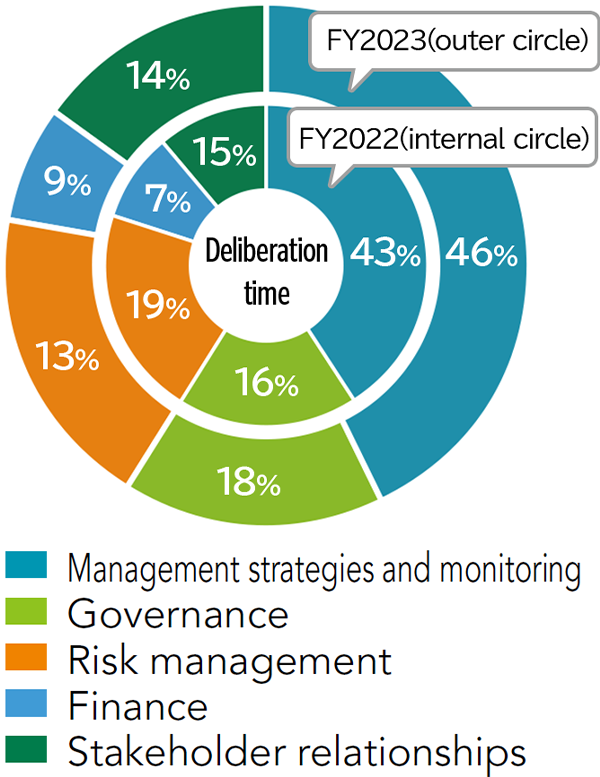
Main themes for deliberations and topics of the Board of Directors during in FY2024 (met 15 times)
| Theme category | Main topics |
|---|---|
| Purpose/materiality/value creation process | Pervasion of Purpose throughout the Group |
| Policy on establishing desirable stakeholder relationships | Evaluation by stakeholders and Dialogue policy with stakeholder (clients, shareholders, employees, etc.), Strategic shareholdings, Promotion of sustainability |
| Medium- to long-term management strategies | Management plans, business portfolio, group asset management business |
| Discipline in capital allocation | Capital policy, human capital, and IT investments |
| Basic policy on internal controls | Group governance, internal control systems, risk management, cybersecurity, and compliance |
Every year we conduct an evaluation of the Board of Directors in an effort to enhance its effectiveness by considering and adopting measures aimed at improving issues identified in the evaluation and by implementing the PDCA cycle.
PDCA Cycle
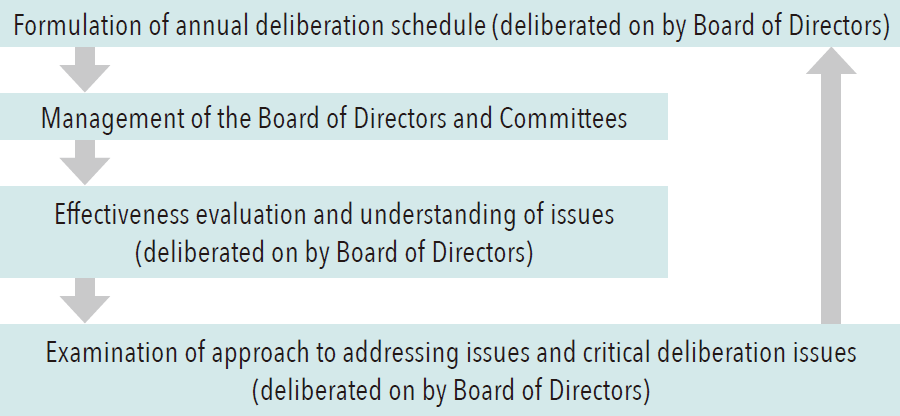
(1) Initiatives to address issues identified through the evaluation of the Board of Directors in FY2023

(2) Results of the evaluation of the Board of Directors in FY2024 and initiatives going forward
In FY 2024, the Board of Directors confirmed steady improvements in its effectiveness through a series of initiatives and deliberations to realize the Future vison of the Board of Directors. These included efforts to enhance accountability to a diverse range of stakeholders – such as expanding opportunities for dialogue – , and deeper deliberations on the business portfolio with a focus on medium- to long-term ROE and other performance indicators, and furthermore discussions on the optimal composition of the Board of Directors and each committee. The results of the FY2024 Evaluation of the Board of Directors indicated that the Board and each committee are aware of their respective objectives and are endeavoring to invigorate discussions and improve their supervisory functions.
As a result, we believe that an adequate degree of effectiveness is sustained. At the same time, we also identified the issues to be improved and enhanced as below, which will strive to work on in order to realize the Board’s Future vision.
According to the recognition of the following issues, in FY2025 we will deepen our deliberations on themes that will have a significant impact on the formulation of the new Medium-Term Management Plan and on strengthening our business portfolio. At the same time, we will select themes and conduct repeated deliberations in order to focus on topics that are appropriate for a Board of Directors as a monitoring board with a majority of External Directors.
| Issues identified in FY2024 Evaluation of the Board of Directors |
| (1) Ongoing improvement in accountability to stakeholders |
| (2) Deepening deliberations toward the formulation of the Medium-Term Management Plan through a rallying process with the executives |
| (3) Sophisticating the management framework of the Board of Directors as a monitoring board and the statutory committees |
Committees
To ensure the effectiveness of corporate governance and further enhance the soundness and reliability of the Group’s business model, as well as the transparency of management, we have established the Risk Committee and the Conflict of Interest Committee as advisory bodies to the Board of Directors to complement the three committees required under the Companies Act, namely, the Nominating Committee, the Compensation Committee, and the Audit Committee.
Every year, each committee conducts a self-evaluation in an effort to improve its autonomous management by considering and adopting measures aimed at improving issues identified in the evaluation. The results of the self-evaluations are reported to the Board of Directors in April for deliberation.
Meetings of Board of Directors and Committees (July 2024 through June 2025)
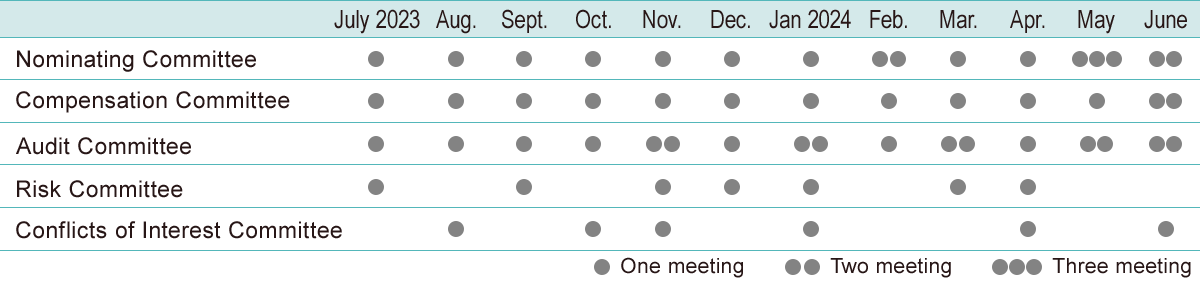
Overview of the Board of Directors and Committees
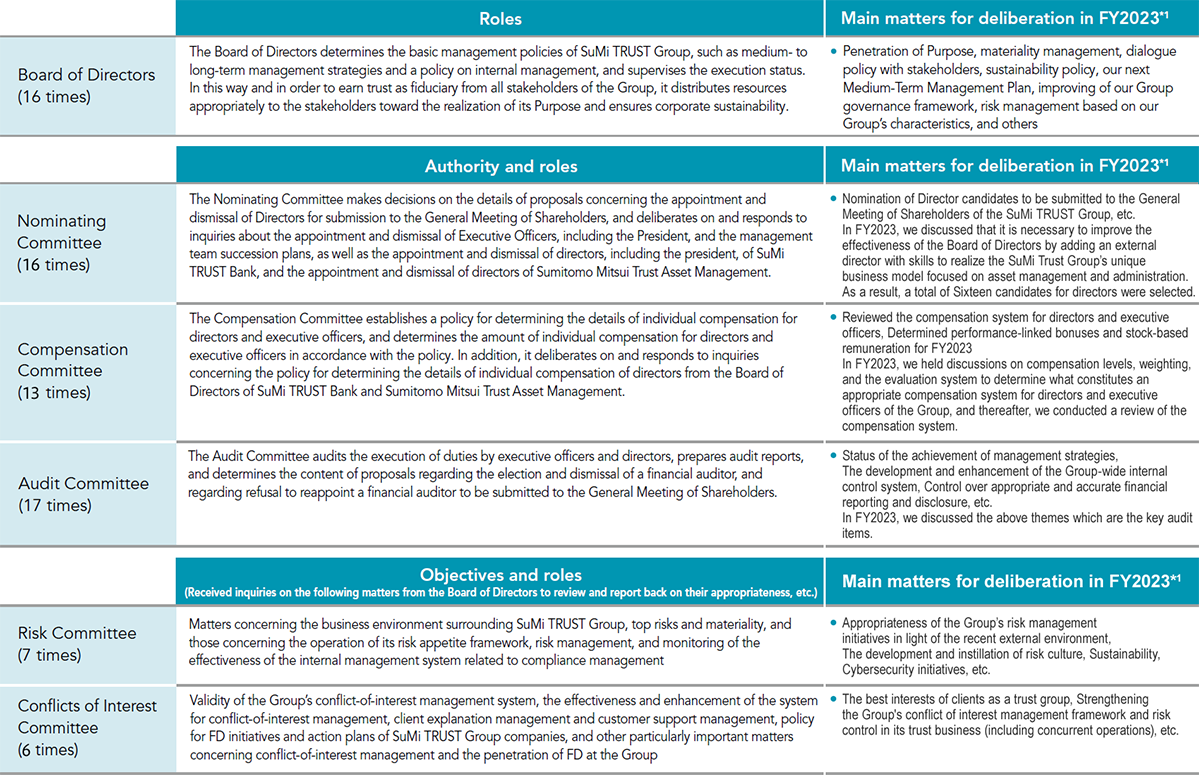
*1July 2024 through June 2025
Succession Plans
In order to achieve sustainable growth for the Group and enhance its corporate value, we have formulated succession plans for the top management of SuMi TRUST Group, SuMi TRUST Bank and Sumitomo Mitsui Trust Asset Management. We have also created management personnel development plans for those in charge of managing each business and those engaged in corporate management. We have defined the ideal qualities and requirements for the nominees required to serve as directors and officers, and systematically manage and cultivate a group of candidates.
Development of Management Personnel Based on Management Team Succession Plan

Training and appointment process
The Nominating Committee selects a pool of top management candidates each year based on the proposals and opinions presented by the executive side. Based on the current and future business environment, the Nominating Committee deliberates on future development policies, assignments to be given to the candidates and other matters based on performance, achievements, evaluations, expertise and experience (skills), and reflects such matters as placement in different departments from the next fiscal year onward, giving candidates an opportunity to develop and to overcome challenges. We also continue to track the status of development. While continuing this cycle, when the Company actually appoints new top management members, the Nominating Committee will deliberate on the candidates’ performance, achievements, evaluations, expertise and experience (skills), in a multifaceted manner, with a focus on candidates who have been trained during the cycle, and will ultimately report to the Board of Directors. The progress of succession plans and development plans are periodically reported to the Board of Directors.
Compensation System for Directors and Executive Officers
In principle, the compensation system consists of a combination of a basic salary as fixed compensation, and performance-linked compensation in the form of bonuses and stock compensation (RS Trust).
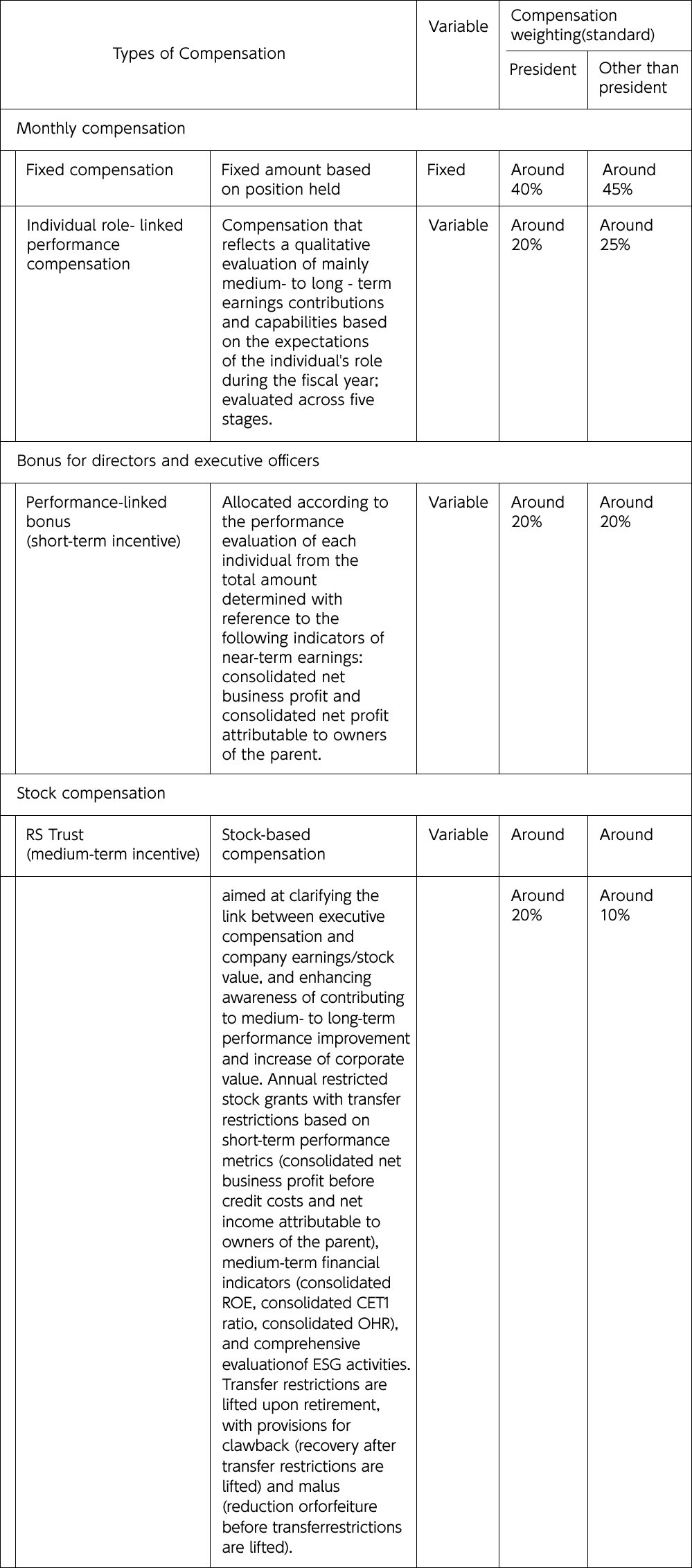
- ”Malus and Claw back Provision”
-
For instances of significant revisions to financial information from prior years owing to inflated figures or malpractice, the booking of large losses stemming from excessive risk taking, serious violations of laws, regulations, or internal rules, or actions that significantly harms the Company’s reputation of corporate value, we have introduced a system for applying malus (reduction or cancellation before the lifting of transfer restrictions) and clawback (recovery after the lifting of transfer restrictions) provisions to stock compensation (RS Trust)
For performance-linked bonuses, and stock compensation (RS Trust), we have established a system in which the items shown in the table below are set as indicators (KPI) and reflected in the amount of compensation. The compensation system for directors and executive officers was reviewed in FY2025. For details, please see “Message from Chairperson of the Compensation Committee”.
Message from Chairperson of the Compensation Committee
The Compensation Committee has held a series of discussions on “ESG Overall Assessment” for stock Compensation and decided to make the following revisions.
Under the ESG Overall Assessment, activities were previously evaluated in terms of both quantitative and qualitative aspects for the five key items selected based on the materiality. Under this revision, KPIs have been clarified for each item, and assessment is now centered on quantitative assessment. The name of this assessment has also been changed to “Sustainability Activity Assessment”.
With the aim of realizing our aspiration, with regard to KPIs we have selected “four indicators of risk culture in the employee awareness survey”, which indicate the state of fiduciary spirit, upon which a foundation of long-term relationships of trust is built with clients, and the “ratio of female employees in management positions”, which is one of the indicators of diversity essential to building innovation.
We will continue to examine the Group’s compensation system in light of changes in the external environment and management strategies.
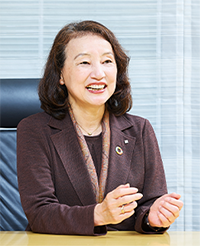 Hiroko Kawamoto
External Director
Chairperson of the Compensation
Committee
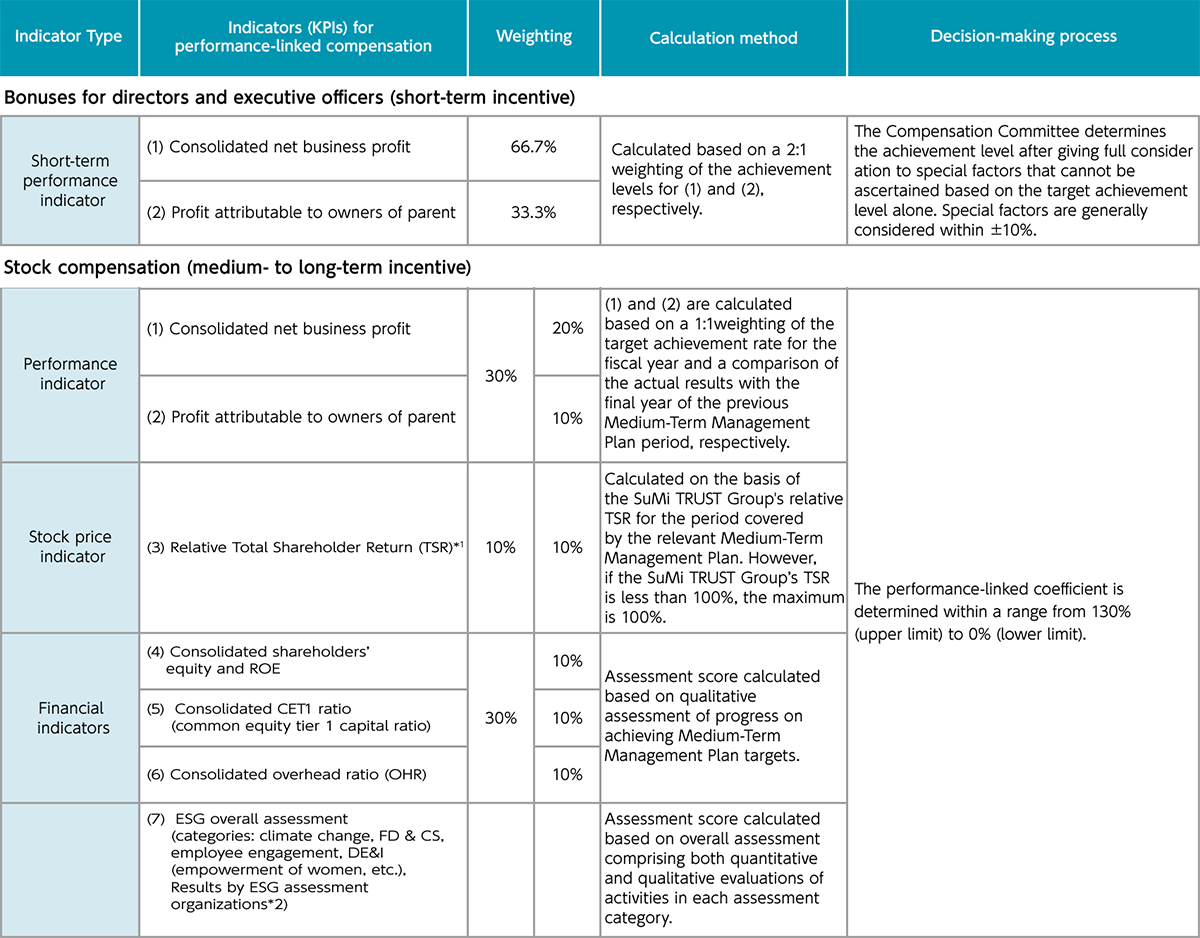
*1The comparative index for relative TSR is the average relative TSR calculated using the rate of change of the TOPIX Industry (Banking) (inclusive of dividends) and the rate of change of the JPX Nikkei Index 400 (inclusive of dividends).
*2The five key items and KPIs for the Sustainability Activity Assessment are as follows.
| Five key items | KPI |
|---|---|
|
Cumulative amount of sustainable finance initiatives*3 |
|
Employee awareness survey “Four indicators of risk culture”*3 Customer Satisfaction Rating*3 |
|
Employee awareness survey “Vitality level”*3 |
|
Ratio of female employees in management positions*4 Number of paid leave days taken*3 |
|
Relative evaluations in assessments by external assessment organizations*5 |
*3Evaluated based on SuMi TRUST Bank’s internal target achievement rate, etc.
*4Evaluated based on the Group’s internal target achievement rate, etc.
*5Evaluated based on the relative rankings compared with competitors' scores from three external assessment organizations: MSCI, Sustainalytics, and FTSE.
External Directors' Meetings
The External Directors’ Meeting is a meeting body intended to foster trust among external directors through frank exchange of opinions and shared recognition from an independent and objective standpoint and to utilize the opinions expressed at the meeting to fulfil their roles as external directors by channeling them to the executive level as necessary. Two meetings were held during FY2024 and the following themes were discussed:
- Future vision of the Board of Directors to serve as a monitoring board composed of a majority of External Directors, and the composition of the Board of Directors to achieve the goals
- Subjects that should be deliberated by the Board of Directors
*Voluntarily meetings organized by external directors.
Strategic Shareholdings
SuMi TRUST Group has recognized strategic shareholdings as a material management issue and we have hedged the price volatility risk that exceeded our financial risk absorption buffer while constantly working to reduce the overall exposure obtaining the consent of our corporate clients.
SuMi TRUST Group has defined “creating a virtuous circle from increased enterprise value leading to increase in household savings, assets and capital,” as one of our goals. We shall endeavor to foster a virtuous circle framework that facilitates circulation of funds, assets and capital through our asset management and asset administration services, and enhancement of our corporate clients’ enterprise value by offering solution services, with the aim to develop Japanese capital markets.
To realize this objective, we intend to improve our bi-functional expertise as a trust bank Group that assumes the position of an investor as well as an advisor offering solutions to enhance enterprise value, and re-align our policy so that, in principle, we shall not hold any “strategic shareholdings as a conventional stable shareholder.” During the interim policy transition period, we shall strive to fulfill our role as an advisor that “offers solutions to issues to enable sustainable increase in enterprise value through extensive dialogue with our clients.”
- Pace of our strategic shareholding reduction target
Market value vs consolidated total net assets: Aim to achieve less than 20% by the end of March 2029 (including deemed shares)
Cost basis: 4 year (FY25-FY28) reduction target of cumulative total of ¥300bn*
*: Revise the target reduction amount from ¥260bn to ¥300bn in May 2026, reflecting the increase in the market value of the Group’s shareholdings driven by strong stock price performance - Policy regarding the exercise of voting rights regarding our strategic shareholdings
During the interim period in which we will continue to hold strategic shareholdings, SuMi TRUST Bank establishedthe voting rights guidelines for strategic shareholdings and disclosed the results of the exercise.
Targets for the Reduction of strategic shareholdings

- *1:Including repurchased shares and some shares other than strategic shareholding as a conventional stable shareholder
- *2:Including deemed shares and unlisted shares
B/S amount of investment securities held for purposes other than pure investment (Sumitomo Mitsui Trust Bank, Limited)
(Yen bn)
| Mar. 26 | Mar. 25 | |
|---|---|---|
| Listed shares | 888.3 | 887.2 |
| Unlisted shares | 92.9 | 88.8 |
| Deemed shares | 480.6 | 314.9 |
*:The amount of the deemed shares is the market value
Strategic shareholdings (Top 10)
Specified investment shares
| Mar. 26 | Mar. 25 | ||||
|---|---|---|---|---|---|
| Number of shares | B/S amount (Yen bn) | Number of shares | B/S amount (Yen bn) | ||
| 1 | MITSUI & CO.,LTD. | 6,572,800 | 39.1 | 6,572,800 | 18.4 |
| 2 | MINEBEA MITSUMI Inc. | 15,413,900 | 39.0 | 15,413,900 | 33.5 |
| 3 | DAIKIN INDUSTRIES,LTD. | 1,772,600 | 33.1 | 1,899,200 | 30.6 |
| 4 | ITOCHU Corporation* | 16,500,000 | 32.5 | 3,300,000 | 22.7 |
| 5 | TOKYU CORPORATION | 15,677,000 | 29.1 | 15,677,000 | 26.4 |
| 6 | NIDEC CORPORATION | 14,023,200 | 27.5 | 14,023,200 | 34.9 |
| 7 | DAIWA HOUSE INDUSTRY CO.,LTD. | 5,400,000 | 26.5 | 6,150,000 | 30.3 |
| 8 | Sumitomo Realty & Development Co.,Ltd.* | 5,760,000 | 25.2 | 3,840,000 | 21.4 |
| 9 | Tokyo Kiraboshi Financial Group,Inc. | 2,290,600 | 25.2 | 2,290,600 | 13.3 |
| 10 | ORIENTAL LAND CO.,LTD. | 7,880,600 | 21.2 | 9,569,300 | 28.1 |
*:The increase in the number of shares is due to a stock split.
The deemed shares
| Mar. 26 | Mar. 25 | ||||
|---|---|---|---|---|---|
| Number of shares | Market Value (Yen bn) | Number of shares | Market Value (Yen bn) | ||
| 1 | Fujikura Ltd.* | 33,660,000 | 137.6 | 6,777,000 | 36.5 |
| 2 | Central Japan Railway Company | 10,025,000 | 40.9 | 10,025,000 | 28.6 |
| 3 | AEON CO.,LTD.* | 19,110,000 | 36.0 | 6,370,000 | 23.8 |
| 4 | KUBOTA CORPORATION | 13,726,400 | 33.7 | 15,746,100 | 28.8 |
| 5 | TOYOTA TSUSHO CORPORATION | 3,702,000 | 22.0 | 4,584,000 | 11.4 |
| 6 | Sumitomo Electric Industries,Ltd. | 2,571,240 | 21.5 | 4,245,000 | 10.4 |
| 7 | YASKAWA Electric Corporation | 5,208,000 | 20.9 | 5,208,000 | 19.4 |
| 8 | Mitsui O.S.K.Lines,Ltd. | 3,000,000 | 19.4 | 3,000,000 | 15.5 |
| 9 | NIPPON STEEL CORPORATION* | 32,191,500 | 18.5 | 6,438,300 | 20.5 |
| 10 | Daiwa Securities Group Inc. | 12,444,000 | 18.1 | 12,444,000 | 12.3 |
*:The increase in the number of shares is due to a stock split.
Please refer to the Excel file below for the detail of strategic shareholdings.